

WHO IS JONATHAN STROUD?
Jonathan Stroud is a highly skilled business consultant with a focus on paid acquisition, sales funnels, and direct response marketing.
Jonathan's expertise is in paid acquisition, including the use of Meta Ads and TikTok Ads.
He has a deep understanding of how to drive strong returns on investment (ROI) for his clients, and has helped hundreds of entrepreneurs increase their profitability and make a meaningful impact in their communities.
More About Jonathan
In addition to his skills in paid acquisition and direct response marketing, Jonathan is also well-known for his ability to build highly effective sales funnels.
He has a keen eye for identifying opportunities for optimization and has helped hundreds of businesses streamline their sales processes and increase their overall revenue.
Jonathan's dedication to helping entrepreneurs succeed has earned him numerous accolades, including the prestigious 2 Comma Club Award from ClickFunnels. This award is given to only the top 1% of entrepreneurs who have achieved over $1 million in sales through a single sales funnel, and is a testament to Jonathan's expertise and success in the industry.
Jonathan's passion for helping others succeed, combined with his expertise and track record of success, make him a valuable asset to any business looking to grow and thrive.
Whether you're a small startup or a well-established company, Jonathan has the skills and experience to help you reach your goals and achieve long-term success.
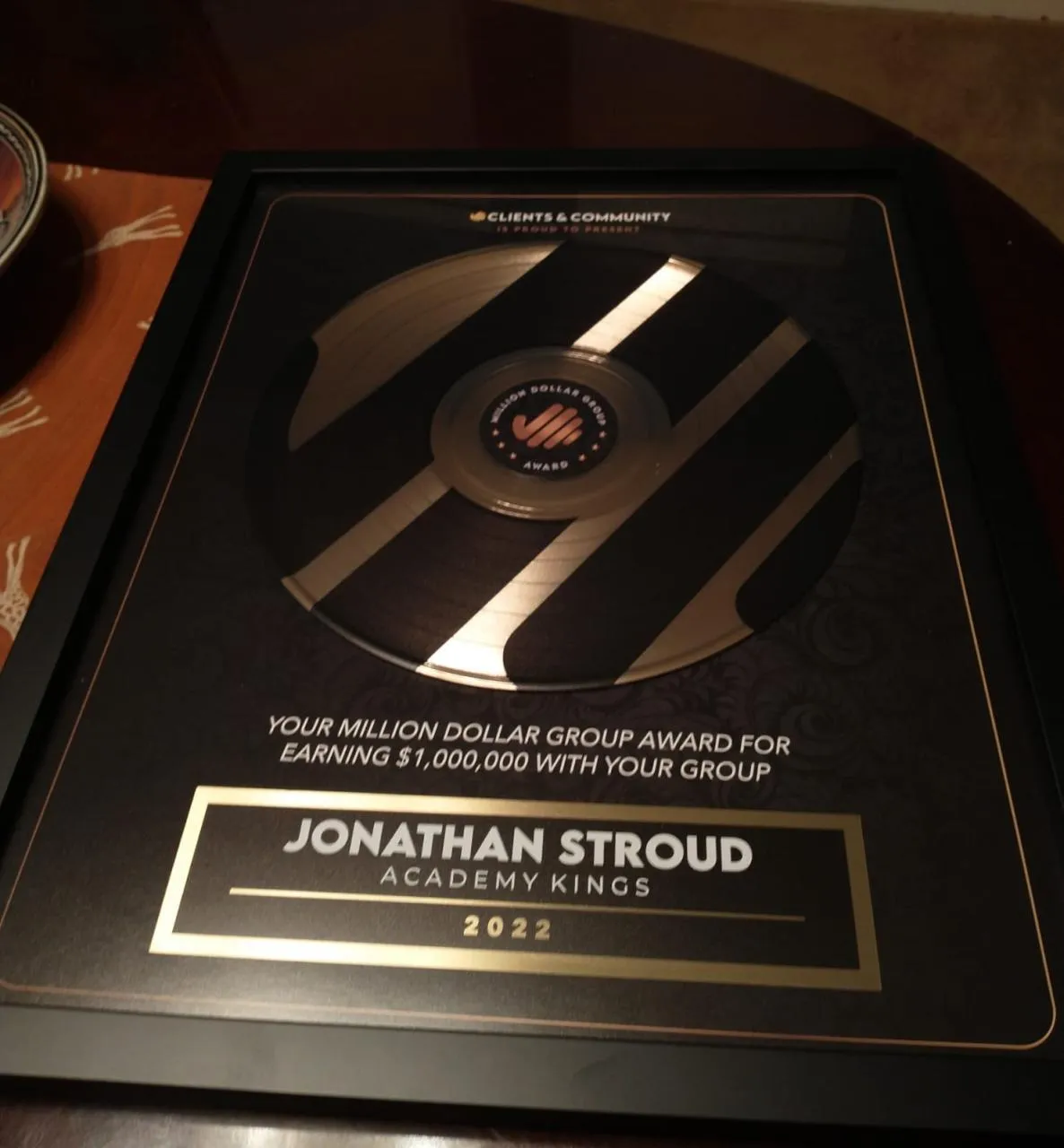
$1,000,000 Award For Group Ads Funnel
Awarded Paid Ads Facebook Group Sales Funnel That Generated Over $1,000,000+ in Sales Awarded by Clients & Community.


PASSIONS
All things Space,
marketing,
sales funnels & paid ads.
Reading & learning
Growth mindset.

3X NASA SOCIAL
Attended Multiple NASA Social to include:
Journey to Mars SLS Engine Test
ORBITAL ATK: ANTARES RETURN TO FLIGHT
NASA's Langley Research Center splashdown test of the Orion Crew Module.

COPYWRITING
After college, was freelancee copywriter with USRA for NASA's SOFIA Telescope.
& had a space blog where interviewed Apollo 15 & STS Astronauts monetized through affiliate marketing & influencer strategies.
Featured ON:






GET TO KNOW JONATHAN BETTER:



Read Jonathan's Latest Blogs Here:
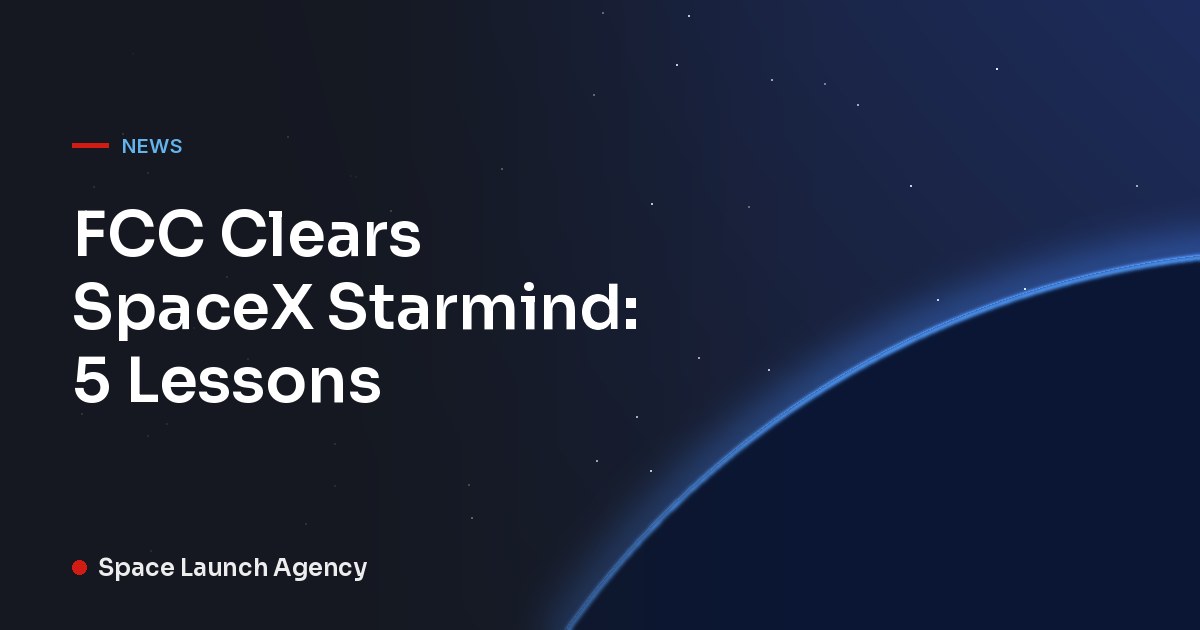
SpaceX Starmind FCC Approval: 5 Lessons for Space Firms
TL;DR: On November 25, the Federal Communications Commission authorized SpaceX to deploy up to one million satellites that work as data centers in space, a constellation called Starmind. It is the first time the FCC has approved an orbital data center constellation, and it came over objections from Amazon Leo, Viasat and the American Astronomical Society. The license comes with deployment deadlines and a deferred decision on how some satellites will be disposed of. For space companies, the message is clear. Orbital computing just moved from slide decks to a licensed plan, and the companies that explain where they fit in this new market will be the ones buyers and investors remember.
Key takeaways
- The FCC cleared SpaceX to deploy one million orbital data centers on November 25, rejecting calls to block the constellation over interference, orbital safety and environmental concerns, SpaceNews reported.
- SpaceX must launch its first Starmind satellite by November 25, 2033, deploy half the constellation by 2038 and the full constellation by 2040. Elon Musk said he expects the first satellites to launch in the third quarter of 2027, Spaceflight Now reported.
- Other orbital data center applications are pending, including Starcloud's 88,000-satellite plan and Blue Origin's 51,600-satellite Project Sunrise, and the FCC said it intends to decide on each quickly, Via Satellite reported.
- The FCC deferred SpaceX's request to dispose of some satellites outside Earth's atmosphere, so SpaceX must file a modification with a final debris plan before deploying satellites above 600 kilometers, Quartz reported.
- For space companies, the lessons are about claiming a role in orbital computing, turning regulatory milestones into proof, answering objections head-on, preparing for scale and staying honest about what is still unproven.
What did the FCC approve for SpaceX Starmind?
Here is the news in short. On Wednesday, November 25, the FCC's Space Bureau granted, in part, SpaceX's application to build and operate an orbital data center system called Starmind. SpaceX filed the application at the end of January. The approval covers up to one million satellites in orbital shells between 500 and 1,002 kilometers in altitude.
The key points:
- Optical links first. The satellites will mainly talk to each other over optical inter-satellite links. The FCC allowed limited Ka-band radio use for backup and emergency telemetry, tracking and command, on an unprotected, non-interference basis.
- Firm deadlines. SpaceX must deploy one satellite by November 25, 2033, 10% of the constellation by 2035, 50% by 2038 and the rest by 2040, or the authorization becomes void.
- Objections rejected. Amazon Leo, Viasat and the American Astronomical Society filed petitions to deny. The FCC said many concerns about the feasibility and long-term impact of orbital data centers fall outside its mandate.
- One question left open. The FCC deferred SpaceX's request to send some satellites to disposal orbits instead of re-entering them into the atmosphere.
SpaceX describes each Starmind satellite as carrying a compute payload of 175 kilowatts on average and up to 250 kilowatts, according to Via Satellite. SpaceX plans to launch them on Starship and build them in Bastrop, Texas, Spaceflight Now reported. FCC Chairman Brendan Carr called the decision a "bold new frontier" and said SpaceX and "the many competitors working on their own orbital data centers are meeting the moment."
Why does this matter for the space business?
First, orbital computing now has a regulatory path. Until this week, data centers in space were mostly plans and filings. The FCC has now shown how it will treat them, and it said it will rule on the other pending applications quickly. We have followed this market closely, from Google's Project Suncatcher launch deal with Blue Origin to Ramon.Space's raise for computing in orbit.
Second, the FCC drew a line between regulating spectrum and judging business models. "In many cases, the comments seek to substitute the government's judgment regarding the viability of business endeavors for that of the applicant and private enterprise. We decline to do so," the FCC said, as quoted by Via Satellite. That means the market, not the regulator, will decide which orbital computing plans succeed.
Third, the debate is far from over. Astronomers said they were "disheartened and dismayed," and Via Satellite noted that analysts still see orbital data centers as technically and economically unproven. Every company in this space will face those questions from buyers and investors.
Who wins and who loses from the Starmind approval?
Likely winners
- SpaceX. It now holds the first FCC approval for an orbital data center constellation, with a long runway to build it.
- Other orbital data center applicants. The FCC has set a precedent and said it will decide on pending applications quickly.
- Suppliers to large constellations. Solar arrays, radiators, optical terminals, propulsion and space traffic tools are all part of what a constellation like this needs.
- Space founders pitching orbital computing. A licensed plan from the largest launch provider makes the market easier to explain to investors.
Likely losers or under pressure
- The groups that objected. Amazon Leo, Viasat and the American Astronomical Society saw their petitions denied.
- Ground-based astronomy. The AAS said it was gravely concerned about research under a changed night sky.
- Smaller orbital computing startups. They now compete for attention, talent and launch capacity with a company that builds its own satellites and rockets.
What should space entrepreneurs do now?
1. Claim your role in orbital computing clearly
Most space companies will not build a million satellites. But many can supply, support or serve the companies that do. Say plainly where you fit, whether that is components, ground systems, software, space safety or data services. Our guide to writing a value proposition for a space company walks through how to do that in one sentence.
2. Turn regulatory milestones into proof
An FCC approval is one of the strongest signals a space company can share, because a regulator reviewed the plan. If you win a license, spectrum grant or other approval, announce it with the facts and explain what it lets you do next. Our post on Globalstar's FCC approval as a regulatory milestone shows how to frame that kind of news.
3. Answer objections before buyers raise them
The Starmind record is full of objections about interference, debris and the night sky. Your buyers will have their own version of those concerns. Put your answers on your website and in your sales deck, including how you handle safety, spectrum and end of life. Our post on the FCC Part 100 space licensing overhaul covers how licensing changes shape those conversations.
4. Prepare your sales and supply story for scale
SpaceX's deadlines run from 2033 to 2040, and Musk said he expects volume to grow sharply in 2028 and 2029. If you sell into constellations, show buyers you can deliver at volume, on time and with consistent quality. Our space marketing guide covers how to build that kind of positioning.
5. Stay honest about what is still unproven
Analysts still call orbital data centers unproven, and the FCC left the disposal question open. If you are building in this market, share what you have tested and be clear about what is still ahead. Buyers trust companies that separate facts from plans. Our post on AI competitive intelligence for space companies shows how to track competitors' claims so you can position against them with facts.
A quick checklist for space companies watching this news
- Market role: Can a buyer tell in one sentence where you fit in orbital computing?
- Regulatory proof: Are your licenses and approvals easy to find on your website?
- Objection handling: Do your materials answer safety, spectrum and debris questions?
- Scale readiness: Can you show buyers how you would deliver at volume?
- Accuracy: Do your announcements separate what you have done from what you plan to do?
Frequently asked questions
What is SpaceX Starmind?
Starmind is SpaceX's planned constellation of up to one million satellites that would work as data centers in space. The satellites would mainly communicate over optical inter-satellite links and orbit between 500 and 1,002 kilometers in altitude.
What did the FCC approve on November 25?
The FCC's Space Bureau granted, in part, SpaceX's application for its orbital data center system, including limited Ka-band radio use for backup and emergency telemetry, tracking and command. It deferred SpaceX's request to dispose of some satellites outside the atmosphere.
When will SpaceX launch Starmind satellites?
Elon Musk said he expects the first satellites to launch in the third quarter of 2027. The FCC requires SpaceX to deploy its first satellite by November 25, 2033, half the constellation by 2038 and the full constellation by 2040.
Who opposed the SpaceX Starmind application?
Amazon Leo, Viasat and the American Astronomical Society filed petitions to deny the application, and groups such as the Secure World Foundation called for more scrutiny. The FCC rejected the petitions and said many concerns fell outside its mandate.
What does the Starmind approval mean for other space companies?
It shows that orbital computing now has a regulatory path, and the FCC said it will decide on other pending applications quickly. Companies that explain their role in this market, share regulatory proof and answer safety questions will be in a stronger position with buyers and investors.
Want to work through this with other space founders?
Join Space Entrepreneurs, free. Space Entrepreneurs is the free Skool community I host for founders who are starting, marketing and growing space companies. Bring your questions, share what you are working on and learn from people building in the same industry.


Want Better Ads?
Get Your Ads Health Checklist For FREE Today!

