
WHO IS JONATHAN STROUD?
Jonathan Stroud is a highly skilled business consultant with a focus on paid acquisition, sales funnels, and direct response marketing.
Jonathan's expertise is in paid acquisition, including the use of Meta Ads and TikTok Ads.
He has a deep understanding of how to drive strong returns on investment (ROI) for his clients, and has helped hundreds of entrepreneurs increase their profitability and make a meaningful impact in their communities.
More About Jonathan
In addition to his skills in paid acquisition and direct response marketing, Jonathan is also well-known for his ability to build highly effective sales funnels.
He has a keen eye for identifying opportunities for optimization and has helped hundreds of businesses streamline their sales processes and increase their overall revenue.
Jonathan's dedication to helping entrepreneurs succeed has earned him numerous accolades, including the prestigious 2 Comma Club Award from ClickFunnels. This award is given to only the top 1% of entrepreneurs who have achieved over $1 million in sales through a single sales funnel, and is a testament to Jonathan's expertise and success in the industry.
Jonathan's passion for helping others succeed, combined with his expertise and track record of success, make him a valuable asset to any business looking to grow and thrive.
Whether you're a small startup or a well-established company, Jonathan has the skills and experience to help you reach your goals and achieve long-term success.
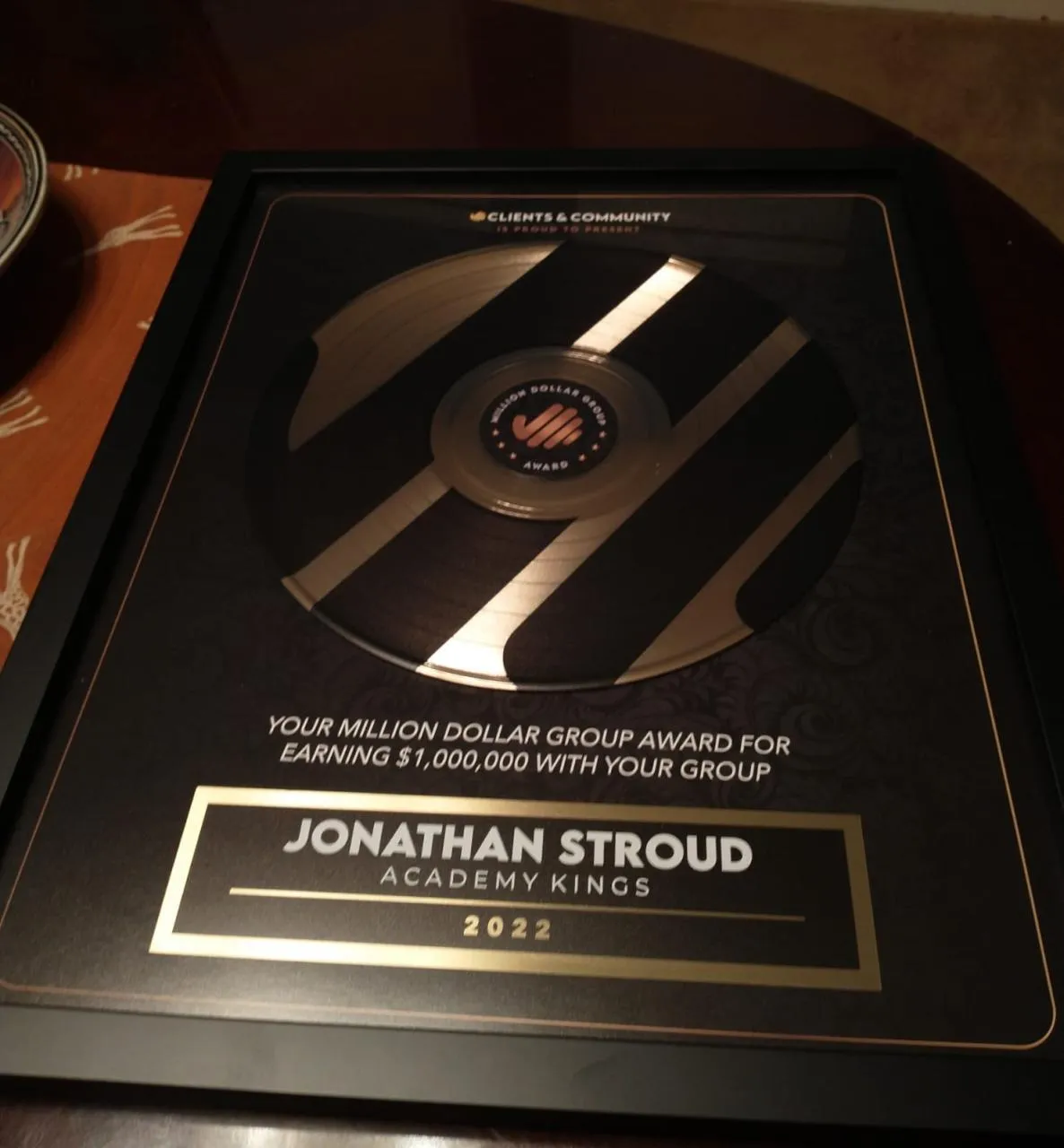
$1,000,000 Award For Group Ads Funnel
Awarded Paid Ads Facebook Group Sales Funnel That Generated Over $1,000,000+ in Sales Awarded by Clients & Community.


PASSIONS
All things Space,
marketing,
sales funnels & paid ads.
Reading & learning
Growth mindset.

3X NASA SOCIAL
Attended Multiple NASA Social to include:
Journey to Mars SLS Engine Test
ORBITAL ATK: ANTARES RETURN TO FLIGHT
NASA's Langley Research Center splashdown test of the Orion Crew Module.

COPYWRITING
After college, was freelancee copywriter with USRA for NASA's SOFIA Telescope.
& had a space blog where interviewed Apollo 15 & STS Astronauts monetized through affiliate marketing & influencer strategies.
Featured ON:





GET TO KNOW JONATHAN BETTER:



Read Jonathan's Latest Blogs Here:
Space Regulations 2027: 7 Rule Changes Founders Should Track
TL;DR: U.S. space rules are changing faster than they have in years. The FAA is proposing changes to its Part 450 launch and reentry rules. The FCC is replacing its satellite licensing rules with a new Part 100. The Office of Space Commerce started a certification pilot for new kinds of missions. A new national policy calls for launch ranges that can support more than 1,000 launches and reentries a year by 2030. Meanwhile, CMMC Phase 2 is suspended and SBIR is back through 2031. Most changes aim to cut red tape, but they also bring comment deadlines and new choices. This is general information, not legal advice.
Key takeaways
- Most 2026 changes aim to make licensing faster and simpler.
- Comment periods are open now, so founders can shape the final rules.
- Faster paths do not remove the need for an FCC license or export control compliance.
- Treat regulatory readiness as part of your sales and fundraising story.
Why do space regulations matter for startups?
Rules decide how fast you can launch, operate and sell. A license that takes months longer than planned can push back revenue and scare off investors. Knowing what is changing helps you plan, and it gives you something useful to talk about with buyers and partners.
1. FAA Part 450 launch and reentry changes
An August 2025 executive order, Enabling Competition in the Commercial Space Industry, directed agencies to speed up commercial space approvals. The FAA has since proposed changes to its Part 450 rules for launch and reentry licenses. Two examples:
- Physical containment: an October 2026 proposal would simplify requirements when operators use physical containment to control hazards.
- Flight abort: a November 2026 proposal would clarify when an operator does not have to abort a flight. Comments are due December 9, 2026.
What it means: launch and reentry companies may see lighter requirements. Their customers may see shorter waits.
2. FCC Part 100 replaces Part 25
The FCC is replacing Part 25, its long-standing satellite licensing rules, with a new Part 100 framework. It uses standard forms, a presumption that compliant applications are acceptable, and tighter timelines. The FCC order and our FCC Part 100 lessons explain it.
What it means: satellite operators could get licensed faster, but only if their filings are complete and follow the new format.
3. Space Commerce Certification for new missions
The Office of Space Commerce launched a pilot of its Space Commerce Certification, meant to give novel missions one review path across agencies. In November 2026 it picked four companies for the first pilot group. The pilot is voluntary and does not replace FAA or FCC licenses. Our certification pilot lessons cover the details.
What it means: companies doing something new, such as in-space services or orbital data centers, may get a clearer path to approval.
4. A national goal for more launches
The National Space Transportation Policy, published in August 2026, says U.S. space transportation ranges must grow to support more than 1,000 launches and reentries every year by 2030.
What it means: expect more investment in spaceports and range capacity, and more pressure on agencies to approve launches quickly. For the launch market behind this, see our Starship ship catch lessons.
5. CMMC Phase 2 is suspended
The Department of War suspended CMMC Phase 2, the third-party assessment step that was due in November 2026, while it reviews the program. Phase 1 self-assessments remain in place.
What it means: defense suppliers still need to meet current cybersecurity requirements and keep their evidence ready. Watch for the review's outcome.
6. SBIR and STTR are back through 2031
SBIR and STTR authority lapsed on September 30, 2025. The programs were reauthorized through 2031 when the President signed the bill on April 13, 2026, according to the University of Washington's federal relations office.
What it means: one of the most common first contracts for space startups is open again. See our SBIR Phase 2 guide.
7. Environmental review shortcuts and legal risk
Law firm Ashurst Perkins Coie notes that the FAA has proposed broad waivers of environmental requirements, and that this creates litigation risk under the Administrative Procedure Act, in its summary of the 2026 changes. It also notes that congressional leaders have questioned the FCC's authority over orbital debris.
What it means: some changes could be challenged in court or changed again. Build plans that still work if a rule shifts.
What has not changed?
- Export controls still apply. Keep controlled technical data out of public marketing. See our ITAR-safe marketing guide.
- Spectrum licensing is still the FCC's job. A Commerce certification does not replace it.
- Government contracting rules still apply. Our guide to government contracts for space companies covers the basics.
How should founders stay on top of space regulations?
- Set alerts on the Federal Register for FAA, FCC and Commerce space rules.
- Comment on proposals that affect you, through your own filing or a trade group.
- Talk to a space lawyer before you file for licenses. For a deeper look at space law, listen to our Space Launch Podcast conversation with space attorney Trevor Hehn.
- Use readiness in your story. Buyers and investors want to know you have a path to approval.
The space marketing guide shows how to turn that readiness into a clear message.
Frequently asked questions
What space regulations are changing in 2027?
Key changes include FAA proposals to simplify Part 450 launch and reentry rules, the FCC's new Part 100 satellite licensing framework, the Office of Space Commerce certification pilot, a national goal for more launch capacity, the CMMC Phase 2 suspension and SBIR's reauthorization.
What is FAA Part 450?
Part 450 is the FAA's set of rules for commercial launch and reentry licenses. In 2026 the FAA proposed several changes meant to reduce burden on license applicants.
What is FCC Part 100?
It is the FCC's new framework for satellite and earth station licensing, replacing Part 25. It uses standard forms and a presumption that compliant applications are acceptable.
Does the Space Commerce Certification replace FAA or FCC licenses?
No. The pilot is voluntary and does not replace FAA or FCC licenses or spectrum rules.
Is this legal advice?
No. This article is general information. Talk to a qualified space lawyer about your specific situation.
Want to work through this with other space founders?
Join Space Entrepreneurs, free. Space Entrepreneurs is the free Skool community I host for founders who are starting, marketing and growing space companies. Bring your questions, share what you are working on and learn from people building in the same industry.


Want Better Ads?
Get Your Ads Health Checklist For FREE Today!

