

WHO IS JONATHAN STROUD?
Jonathan Stroud is a highly skilled business consultant with a focus on paid acquisition, sales funnels, and direct response marketing.
Jonathan's expertise is in paid acquisition, including the use of Meta Ads and TikTok Ads.
He has a deep understanding of how to drive strong returns on investment (ROI) for his clients, and has helped hundreds of entrepreneurs increase their profitability and make a meaningful impact in their communities.
More About Jonathan
In addition to his skills in paid acquisition and direct response marketing, Jonathan is also well-known for his ability to build highly effective sales funnels.
He has a keen eye for identifying opportunities for optimization and has helped hundreds of businesses streamline their sales processes and increase their overall revenue.
Jonathan's dedication to helping entrepreneurs succeed has earned him numerous accolades, including the prestigious 2 Comma Club Award from ClickFunnels. This award is given to only the top 1% of entrepreneurs who have achieved over $1 million in sales through a single sales funnel, and is a testament to Jonathan's expertise and success in the industry.
Jonathan's passion for helping others succeed, combined with his expertise and track record of success, make him a valuable asset to any business looking to grow and thrive.
Whether you're a small startup or a well-established company, Jonathan has the skills and experience to help you reach your goals and achieve long-term success.
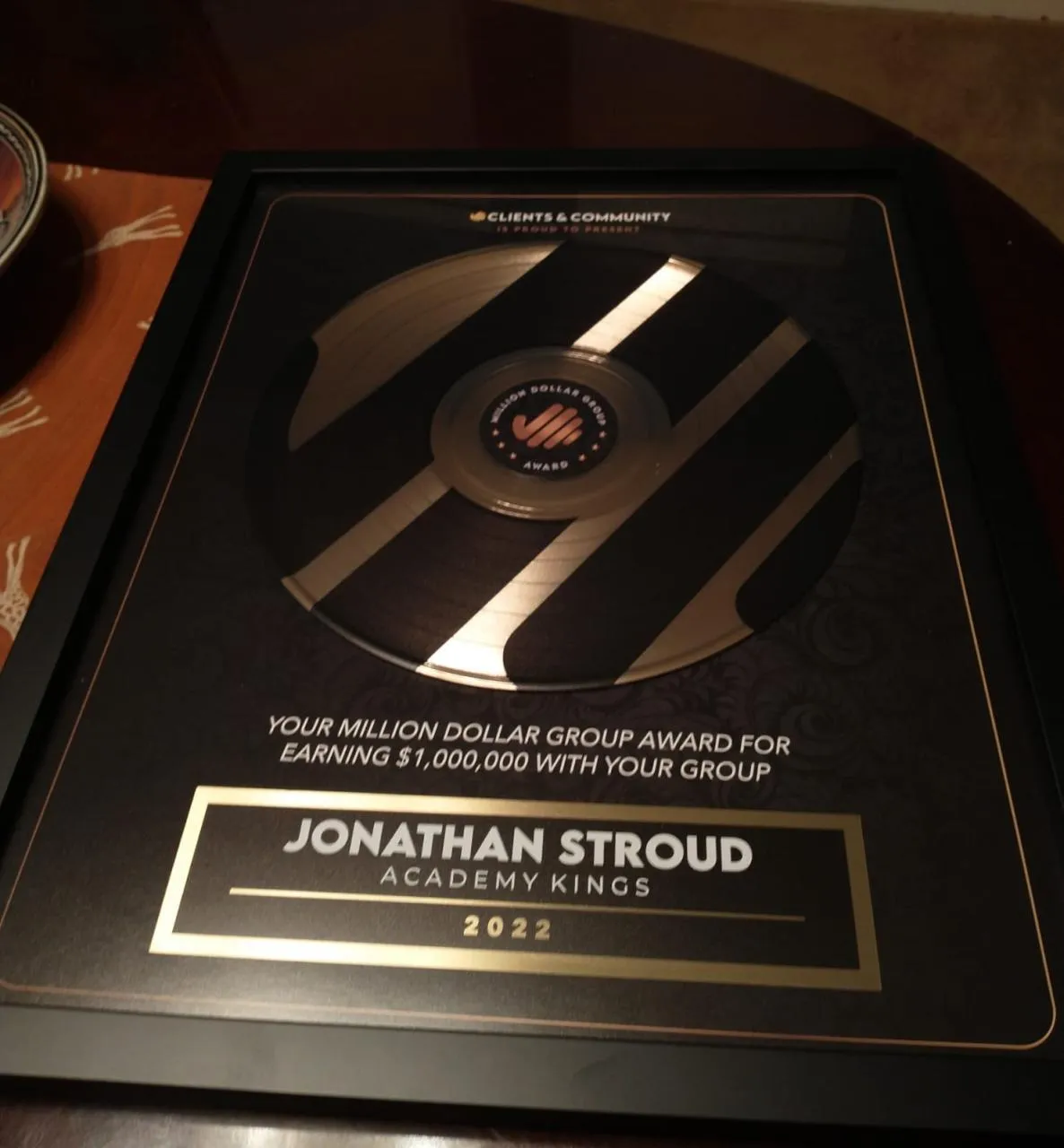
$1,000,000 Award For Group Ads Funnel
Awarded Paid Ads Facebook Group Sales Funnel That Generated Over $1,000,000+ in Sales Awarded by Clients & Community.


PASSIONS
All things Space,
marketing,
sales funnels & paid ads.
Reading & learning
Growth mindset.

3X NASA SOCIAL
Attended Multiple NASA Social to include:
Journey to Mars SLS Engine Test
ORBITAL ATK: ANTARES RETURN TO FLIGHT
NASA's Langley Research Center splashdown test of the Orion Crew Module.

COPYWRITING
After college, was freelancee copywriter with USRA for NASA's SOFIA Telescope.
& had a space blog where interviewed Apollo 15 & STS Astronauts monetized through affiliate marketing & influencer strategies.
Featured ON:







GET TO KNOW JONATHAN BETTER:



Read Jonathan's Latest Blogs Here:
The Space Economy Explained for Founders
TL;DR: The space economy includes everything built for space and everything that uses space to deliver value on Earth. Founders can think of it in segments: upstream (launch, spacecraft and components), downstream (communications, Earth observation and navigation services), ground, in-space services, lunar and exploration, and supporting services. Each segment has different buyers, risks and paths to revenue.
Key takeaways
- The space economy includes services delivered on Earth, not just hardware in orbit.
- Upstream businesses build; downstream businesses use space data and connectivity.
- Each segment has different buyers, regulation and capital needs.
- Pick a segment by your skills, access to buyers and funding path.
What is the space economy?
The space economy covers goods and services used in or derived from space activities. The U.S. Bureau of Economic Analysis measures it through its space economy statistics, and international bodies including the OECD and ESA work on common ways to classify it.
For founders, the useful view is simpler: who pays, for what and why.
What are the main segments of the space economy?
| Segment | What it includes | Typical buyers |
|---|---|---|
| Upstream | Launch, spacecraft manufacturing, subsystems and components | Operators, agencies, defense, integrators |
| Ground | Ground stations, antennas, mission operations software | Operators, agencies |
| Downstream: communications | Satellite broadband, direct-to-device, broadcast | Consumers, enterprises, telecoms, governments |
| Downstream: Earth observation | Imagery, analytics, monitoring | Governments, agriculture, insurance, energy, defense |
| Downstream: navigation and timing | Positioning, navigation and timing services | Transport, finance, telecoms, defense |
| In-space | Servicing, stations, in-space manufacturing | Operators, agencies |
| Lunar and exploration | Landers, payloads, surface systems | Space agencies, commercial partners |
| Supporting services | Insurance, finance, legal, software, data | Space companies and investors |
How does money flow in the space economy?
- Government spending funds exploration, science and defense. NASA's Commercial Lunar Payload Services initiative, for example, buys delivery services to the Moon from commercial companies.
- Commercial customers buy connectivity, data and services.
- Space companies buy from each other: launch, components, ground services and software.
- Investors fund companies ahead of revenue.
Our guide to how space companies make money covers business models in more depth.
What do downstream markets look like?
Downstream businesses use space to serve customers on Earth, often without building hardware. Examples from our news coverage:
- Communications: European telcos and direct-to-device partners.
- Navigation: Xona's commercial navigation launch.
- Lunar computing: HPE's Moon AI computer.
What regulation shapes the space economy?
- Launch and reentry licensing, by the FAA in the U.S.
- Remote sensing licensing, by NOAA's Office of Space Commerce in the U.S.
- Spectrum coordination, nationally and through the ITU.
- Export control, such as ITAR and EAR.
Regulation affects timelines and costs, so factor it into your segment choice.
How should a founder choose where to play?
- Start from your skills and network. Where can you reach buyers?
- Match capital needs to your funding path. See our space startup funding guide.
- Check regulation and time to revenue.
- Validate with buyers before you build.
- Browse ideas in our space business ideas and the guide on how to start a space company.
Exploring where your startup fits? Join Space Entrepreneurs, our free Skool community. For messaging, see the space marketing guide.
Frequently asked questions
What is the space economy?
The goods and services used in or derived from space activities, from launch and spacecraft to communications, Earth observation and navigation services on Earth.
What is the difference between upstream and downstream space?
Upstream builds and launches space hardware. Downstream uses space data, connectivity and signals to deliver services on Earth.
Which space segment is best for a startup?
It depends on your skills, access to buyers, capital and tolerance for regulation. Downstream software and data businesses often need less capital than hardware.
Who pays in the space economy?
Governments, commercial customers, other space companies and, ahead of revenue, investors.
Do you need an engineering degree to start a space company?
No. Many roles and businesses, especially downstream, rely on business, software and domain skills. Partner with technical experts where needed.
Want to work through this with other space founders?
Join Space Entrepreneurs, free. Space Entrepreneurs is the free Skool community I host for founders who are starting, marketing and growing space companies. Bring your questions, share what you are working on and learn from people building in the same industry.


Want Better Ads?
Get Your Ads Health Checklist For FREE Today!

