

WHO IS JONATHAN STROUD?
Jonathan Stroud is a highly skilled business consultant with a focus on paid acquisition, sales funnels, and direct response marketing.
Jonathan's expertise is in paid acquisition, including the use of Meta Ads and TikTok Ads.
He has a deep understanding of how to drive strong returns on investment (ROI) for his clients, and has helped hundreds of entrepreneurs increase their profitability and make a meaningful impact in their communities.
More About Jonathan
In addition to his skills in paid acquisition and direct response marketing, Jonathan is also well-known for his ability to build highly effective sales funnels.
He has a keen eye for identifying opportunities for optimization and has helped hundreds of businesses streamline their sales processes and increase their overall revenue.
Jonathan's dedication to helping entrepreneurs succeed has earned him numerous accolades, including the prestigious 2 Comma Club Award from ClickFunnels. This award is given to only the top 1% of entrepreneurs who have achieved over $1 million in sales through a single sales funnel, and is a testament to Jonathan's expertise and success in the industry.
Jonathan's passion for helping others succeed, combined with his expertise and track record of success, make him a valuable asset to any business looking to grow and thrive.
Whether you're a small startup or a well-established company, Jonathan has the skills and experience to help you reach your goals and achieve long-term success.
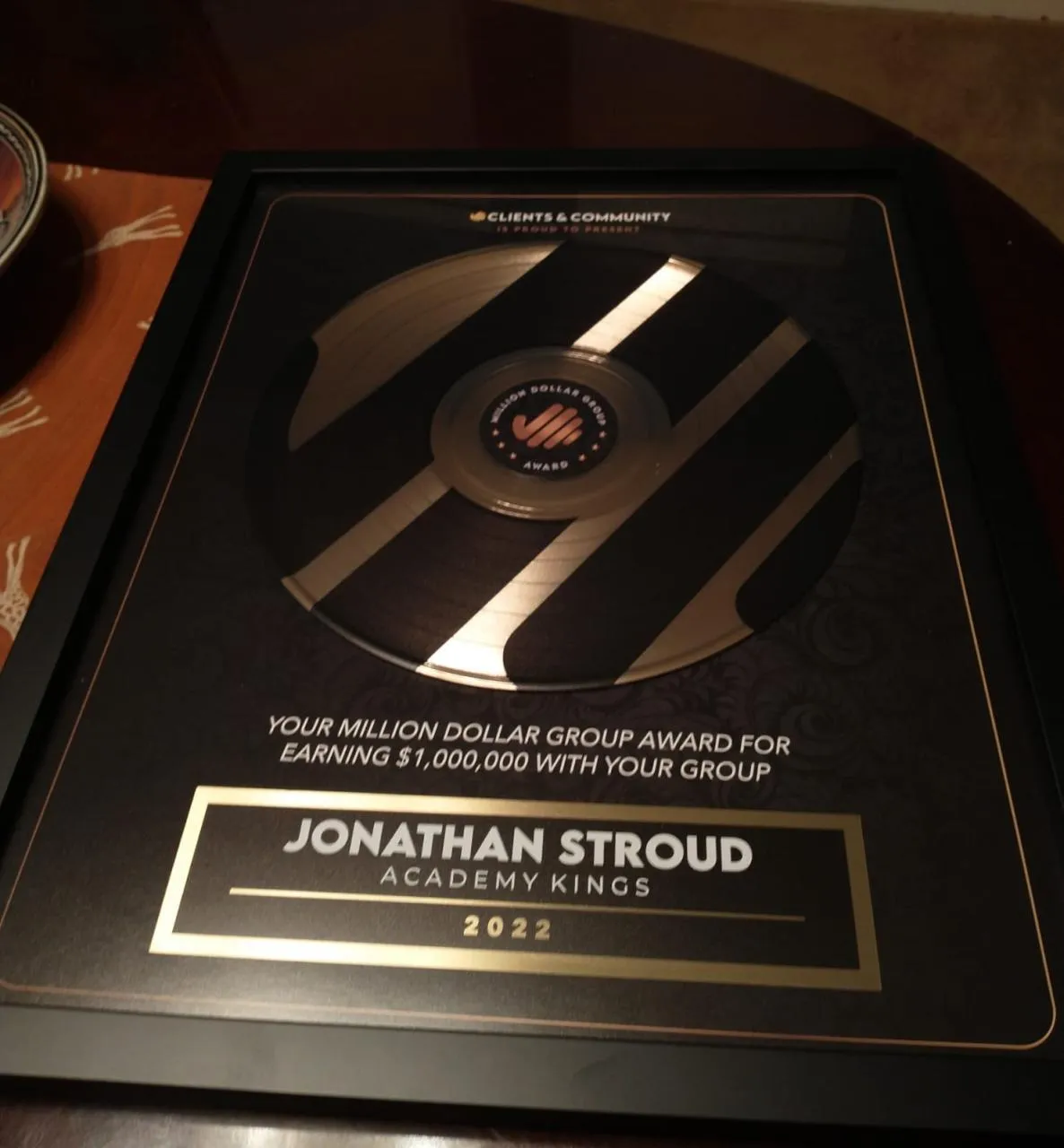
$1,000,000 Award For Group Ads Funnel
Awarded Paid Ads Facebook Group Sales Funnel That Generated Over $1,000,000+ in Sales Awarded by Clients & Community.


PASSIONS
All things Space,
marketing,
sales funnels & paid ads.
Reading & learning
Growth mindset.

3X NASA SOCIAL
Attended Multiple NASA Social to include:
Journey to Mars SLS Engine Test
ORBITAL ATK: ANTARES RETURN TO FLIGHT
NASA's Langley Research Center splashdown test of the Orion Crew Module.

COPYWRITING
After college, was freelancee copywriter with USRA for NASA's SOFIA Telescope.
& had a space blog where interviewed Apollo 15 & STS Astronauts monetized through affiliate marketing & influencer strategies.
Featured ON:






GET TO KNOW JONATHAN BETTER:



Read Jonathan's Latest Blogs Here:
NATO Starlift: 5 Launch Lessons for Space Companies
TL;DR: NATO has started Starlift, a program that pools military launch needs from 10 allies and South Korea and helps them book slots on commercial rockets. A NATO official told Via Satellite the goal is to "organize demand and give launch providers a clearer basis for investment." There is no fixed date for when it will be fully running. For space companies, the lesson is simple. When buyers start pooling demand, the winners are the firms that are easy to find, easy to compare and ready when the buyer is.
Key takeaways
- Belgium, Canada, Finland, Germany, Italy, the Netherlands, Norway, Sweden, Türkiye, the United Kingdom and South Korea committed to fund Starlift through the NATO Support and Procurement Agency, NATO said.
- At its core is a launch brokerage that gathers military requirements and connects them with commercial launch services across a network of spaceports, Via Satellite reported.
- NATO did not disclose program costs or each country's share, and the United States takes part as an associated member, Breaking Defense reported.
- Participating countries will decide together when Starlift reaches initial operational capability, and an official said that depends on industry being ready, the UK Defence Journal reported.
- For space companies, the lessons are about being easy to buy, showing resilience, using rideshare as a door, treating spaceports as strategic sites and getting in front of pooled buyers early.
What is NATO Starlift?
Here is the news in short. NATO announced Starlift on November 17 at its NATO Edge 26 conference in Izmir, Türkiye. The funding nations signed on at the end of October.
Starlift is not a rocket and it does not build new launch sites. It is a buying and planning tool. The key points:
- A launch brokerage. It collects military launch needs from member countries and matches them with slots on commercial rockets.
- A network of spaceports. It draws on sites across the alliance and South Korea, not just Europe.
- A test bed for responsive launch. It will develop and test ideas for urgent, short-notice launches.
- A program office. Countries have set up the structure and funded an office, but there is no fixed timeline for initial capability.
Daniel Hilgert, who heads NATO's space defence industry section, told Via Satellite that Starlift "cannot create additional rockets overnight." Instead, it aims to bring military demand together so launch companies can plan and invest with more confidence.
Why does this matter for the space business?
First, launch is still a bottleneck. A NATO official told the UK Defence Journal that "launch remains a critical bottleneck, particularly in Europe." Satellites deliver nothing until they reach orbit, so demand for reliable launch keeps growing.
Second, pooled demand changes how launch is sold. Instead of many small, one-off deals with single countries, launch companies may face one broker that compares options across several buyers. That rewards providers that are easy to evaluate and ready to fly.
Third, spaceports are moving up the priority list. The NATO official said spaceports should be treated "like military air bases that need protection, redundancy." Hilgert added that NATO could one day help fund spaceports through its NATO Security Investment Programme, if allies agree it is needed.
We covered why buyers want more than one route to orbit in our post on Synspective's move to Firefly.
Who wins and who loses from Starlift?
Likely winners
- Commercial launch providers in member countries. Pooled military demand gives them a clearer view of future customers.
- Spaceports in the network. Sites in places like Norway and the UK could see more interest as strategic infrastructure.
- Rideshare and integration firms. Hilgert said rideshare is one option within the brokerage for planned missions.
- Companies built for fast turnaround. Short-notice launch is a stated goal, even if it is not available today.
Likely losers or under pressure
- Providers that are hard to compare. A broker sorting many options will skip firms with unclear schedules or vague capabilities.
- Single-site, single-route offers. NATO keeps stressing more than one route to orbit.
- Teams expecting quick contracts. There is no fixed start date, so near-term revenue is uncertain.
What should space entrepreneurs do now?
1. Make your launch offer easy to buy
A broker compares options side by side. Publish what a buyer needs to judge you fast: the orbits you serve, payload classes, sites and how you handle schedule changes. A clear one-page capability sheet beats a glossy brochure. Our space marketing guide covers how to build that kind of clear positioning.
2. Sell resilience, not just a ride
NATO's message is "more than one route to orbit." If you are a launch company, show how you back up a mission when plans change. If you build satellites, show buyers you can fly on more than one rocket. Our post on the Vulcan failure and Amazon LEO shows why buyers care.
3. Use rideshare as a door
Planned missions may go out on rideshare. Integrators and smaller satellite makers can use that path to build a track record with defense buyers before chasing dedicated launches.
4. Speak the language of strategic infrastructure
If you run or supply a spaceport, frame it the way NATO now does: protection, redundancy and the ability to keep working through disruption. Use those words on your site, in your deck and in meetings with defense buyers.
5. Get in front of pooled buyers early
Starlift's start date depends on industry being ready. That means talks happen now. Use NATO's single "front door" for industry, map the procurement agency contacts, and team with primes where it helps. Our guides on how to sell to the Space Force and Dream 100 partnerships for space companies can help you build that list. We also covered a related U.S. effort in our post on the Space Force Space Data Network.
A quick checklist for space companies watching this news
- Clarity: Can a buyer compare your offer with others in five minutes?
- Resilience: Do you show how you handle delays or a second route to orbit?
- Rideshare: Have you looked at rideshare as an entry point with defense buyers?
- Language: Does your messaging match how NATO now talks about launch and spaceports?
- Access: Do you know who to contact at NATO's industry front door and procurement agency?
Frequently asked questions
What is NATO Starlift?
Starlift is a NATO program that helps member countries launch military satellites. It pools their launch needs and helps them book slots on commercial rockets through a network of spaceports across the alliance and South Korea.
Which countries are in Starlift?
Belgium, Canada, Finland, Germany, Italy, the Netherlands, Norway, Sweden, Türkiye, the United Kingdom and South Korea committed to fund it. The United States takes part as an associated member, a NATO official told Breaking Defense.
When will Starlift be ready?
There is no fixed date. The participating countries have funded a program office and will decide together when it reaches initial operational capability. A NATO official said that depends on industry being ready.
Does Starlift build new rockets or spaceports?
No. It organizes military demand and connects it with commercial launch services. A NATO official said NATO could fund spaceport projects in the future through its security investment program if allies agree.
How can space companies take part in Starlift?
Commercial launch providers, spaceports and related suppliers can engage through NATO's industry channels and the NATO Support and Procurement Agency. Being clear about your capabilities and ready to fly will matter most when the brokerage starts matching missions.
Want to work through this with other space founders?
Join Space Entrepreneurs, free. Space Entrepreneurs is the free Skool community I host for founders who are starting, marketing and growing space companies. Bring your questions, share what you are working on and learn from people building in the same industry.


Want Better Ads?
Get Your Ads Health Checklist For FREE Today!

