
WHO IS JONATHAN STROUD?
Jonathan Stroud is a highly skilled business consultant with a focus on paid acquisition, sales funnels, and direct response marketing.
Jonathan's expertise is in paid acquisition, including the use of Meta Ads and TikTok Ads.
He has a deep understanding of how to drive strong returns on investment (ROI) for his clients, and has helped hundreds of entrepreneurs increase their profitability and make a meaningful impact in their communities.
More About Jonathan
In addition to his skills in paid acquisition and direct response marketing, Jonathan is also well-known for his ability to build highly effective sales funnels.
He has a keen eye for identifying opportunities for optimization and has helped hundreds of businesses streamline their sales processes and increase their overall revenue.
Jonathan's dedication to helping entrepreneurs succeed has earned him numerous accolades, including the prestigious 2 Comma Club Award from ClickFunnels. This award is given to only the top 1% of entrepreneurs who have achieved over $1 million in sales through a single sales funnel, and is a testament to Jonathan's expertise and success in the industry.
Jonathan's passion for helping others succeed, combined with his expertise and track record of success, make him a valuable asset to any business looking to grow and thrive.
Whether you're a small startup or a well-established company, Jonathan has the skills and experience to help you reach your goals and achieve long-term success.
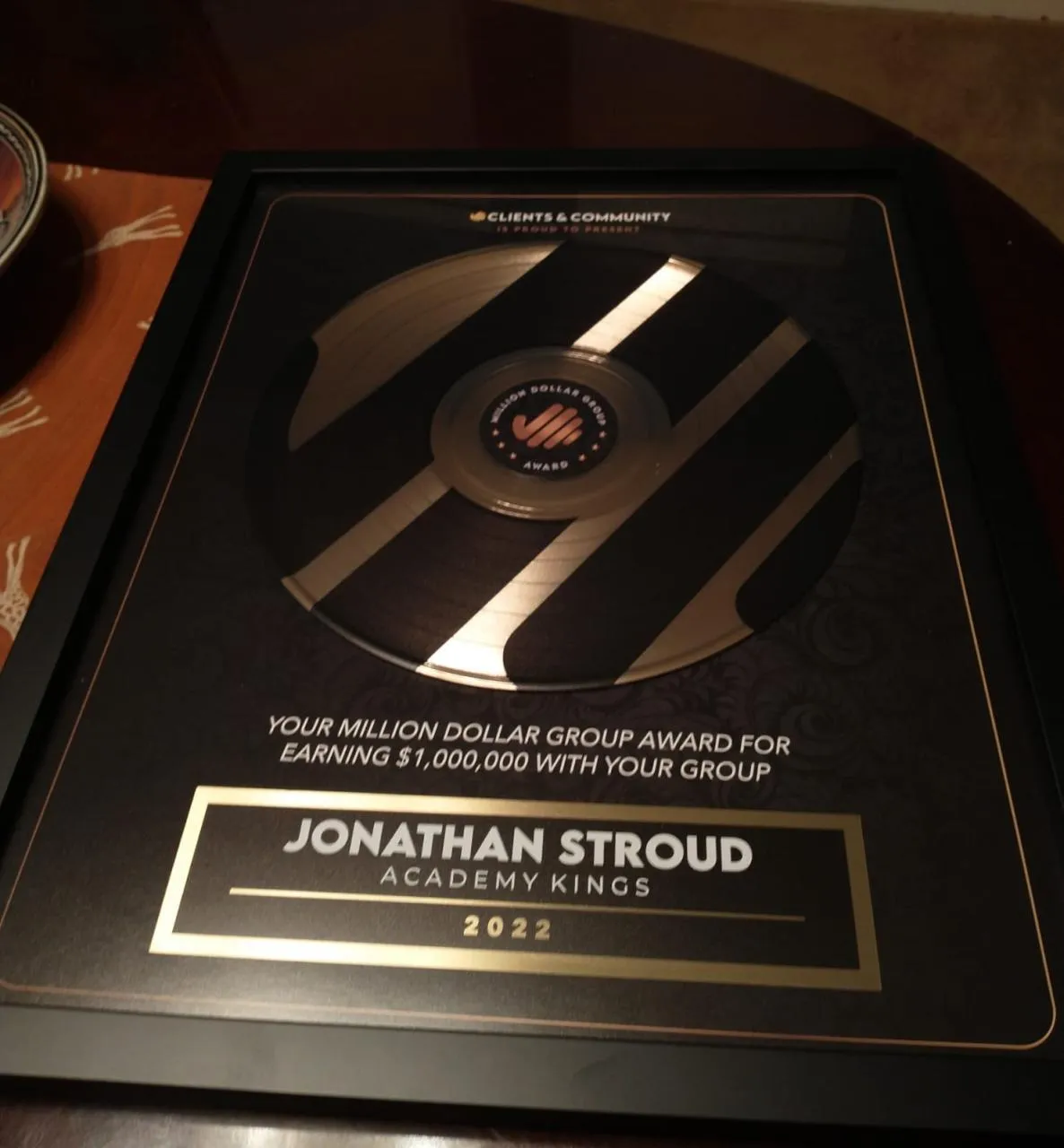
$1,000,000 Award For Group Ads Funnel
Awarded Paid Ads Facebook Group Sales Funnel That Generated Over $1,000,000+ in Sales Awarded by Clients & Community.


PASSIONS
All things Space,
marketing,
sales funnels & paid ads.
Reading & learning
Growth mindset.

3X NASA SOCIAL
Attended Multiple NASA Social to include:
Journey to Mars SLS Engine Test
ORBITAL ATK: ANTARES RETURN TO FLIGHT
NASA's Langley Research Center splashdown test of the Orion Crew Module.

COPYWRITING
After college, was freelancee copywriter with USRA for NASA's SOFIA Telescope.
& had a space blog where interviewed Apollo 15 & STS Astronauts monetized through affiliate marketing & influencer strategies.
Featured ON:





GET TO KNOW JONATHAN BETTER:



Read Jonathan's Latest Blogs Here:

Golden Dome $5B Stopgap Ask: 5 Lessons for Space Firms
TL;DR: The White House has asked Congress for a $5 billion exception for the Golden Dome missile defense program in the next stopgap spending bill. Its request warns that without the extra money, Golden Dome "will be unable to continue production" because the program has no new funding under the current continuing resolution, which expires December 11. For space companies, this is a clear reminder that a big headline program is not the same as money in hand. The companies that plan for funding gaps, diversify their buyers and keep marketing through the uncertainty will be in the best position when the dollars finally flow.
Key takeaways
- The White House is seeking a $5 billion spending exception for Golden Dome, warning that production cannot continue without more funding authority in the next government spending bill, SpaceNews reported.
- The request is part of a 12-page list of "anomalies" sent to Congress on November 23. It also asks for $2 billion more for NASA's Artemis program, SpacePolicyOnline reported.
- The Pentagon asked for almost all of its fiscal 2027 Golden Dome money, $17.1 billion of $17.5 billion, through a proposed reconciliation bill instead of regular appropriations. Whether that bill passes is unclear.
- The White House warned that funding delays for other defense programs "would require contract renegotiation, disrupt prime and subcontractor planning," Breaking Defense reported.
- For space companies, the lessons are about planning for budget gaps, spreading revenue across buyers, staying visible during slow periods, selling into primes and telling the truth about where your contracts stand.
What did the White House ask for?
Here is the news in short. On Monday, November 23, the White House sent Congress a list of funding exceptions it wants in any new continuing resolution (CR). A CR keeps the government running at the previous year's funding levels and blocks money from going to new programs. When an administration wants a program to get more money or start something new during a CR, it asks for an "anomaly."
The key points:
- $5 billion for Golden Dome. The request would give the program a higher rate of operations of $5 billion, plus authority to obligate money at the rate the program needs.
- A blunt warning. The White House wrote that without the anomaly, Golden Dome "will be unable to continue production started under the Working Families Tax Cuts Act, and the program has no new funding under the current CR." That law was the first reconciliation bill, enacted last summer.
- A tight clock. The current CR expires December 11. Congress is returning from its Thanksgiving recess on Monday, which leaves about two weeks to pass full-year funding, pass another stopgap or face a shutdown. Punchbowl News reported that a new CR would notionally run through March 31.
- More to come. The document says additional Defense Department anomaly requests are on the way.
The list goes beyond Golden Dome. According to Aviation Week, it also seeks authority to spend faster on key munitions programs and asks for $2 billion more for Artemis. Aviation Week also noted that Golden Dome Director Gen. Michael Guetlein has long warned that relying on an uncertain reconciliation package calls the program's future into question.
Why does this matter for the space business?
Golden Dome is one of the biggest new demand signals in defense space. Space is at the center of it. The Space Force has awarded agreements worth up to $3.2 billion to 12 companies to develop prototypes for space-based interceptors, a constellation in low Earth orbit meant to stop missiles in the boost, midcourse and glide phases. DefenseScoop reported that the whole program is expected to cost $185 billion, with an initial capability by 2028.
But a program's size does not tell you when money moves. This week's request shows how fragile the funding path is. The program depends on a reconciliation bill that may not pass, and the stopgap that keeps the government open does not include new Golden Dome money unless Congress adds it.
I see the same pattern every time a big defense program makes headlines. Founders hear "$185 billion" and start planning hiring and spending around it. Then the budget process slows everything down. The founders who do well are the ones who treat government demand as real but lumpy, and who build their sales and marketing so they can survive the gaps.
We covered the bigger budget picture in our guide to government space budgets for 2027. This news is a live example of why the timing of that money matters as much as the totals.
Who wins and who loses from the Golden Dome funding fight?
Likely winners
- Companies with diversified revenue. Firms that sell to commercial customers, civil agencies and allies as well as defense can ride out a funding pause.
- Primes and suppliers on already-funded work. Work that was funded before the current CR keeps moving while new money waits.
- Companies with dual-use products. A product that serves both commercial and defense buyers has more than one path to revenue.
- Firms with strong relationships on Capitol Hill and in the program office. When budgets are contested, being known and trusted helps.
Likely losers or under pressure
- Startups betting everything on one program. If Golden Dome production stalls, companies with no other buyers feel it first.
- Subcontractors waiting on new orders. The White House itself warned that delays disrupt prime and subcontractor planning.
- Companies hiring ahead of contracts. Spending against expected awards is risky when the funding path is unclear.
What should space entrepreneurs do now?
1. Plan for the gap, not just the award
Build a cash plan that assumes government money arrives later than promised. Look at how long you can operate if a key award slips by three or six months. If that number makes you nervous, start fixing it now. Our guide to government contracts for space companies explains how contract timelines really work.
2. Spread your revenue across more than one buyer
Golden Dome is exciting, but it should not be your only bet. Map the other buyers who need what you build: commercial operators, civil agencies, allied governments and other defense programs. Our post on dual-use positioning for space startups shows how to frame one product for several markets without confusing anyone.
3. Keep marketing when budgets stall
Funding fights are when many companies go quiet. That is a mistake. Program offices and primes are still planning, and they remember who stayed visible. Keep publishing useful content, keep your website current and keep showing up at the right events. Our space marketing guide covers how to build a steady presence with technical buyers.
4. Sell to the primes as well as the government
Much of the money in a program like Golden Dome flows through large contractors. If you are a component, software or services company, primes may be your fastest path in. They also feel funding delays, so position your product as something that lowers their risk or cost. Our guide to selling to prime contractors explains how to get on their radar.
5. Be honest about where your contracts stand
When you announce a win, be clear about what it is: a prototype agreement, a study, a ceiling value or funded work. Investors and buyers are watching budget news too, and overstated claims hurt your credibility. Our funding and contract announcement playbook shows how to share good news with the facts intact. Keep your sales pipeline stages honest too, so you forecast based on funded work, not headlines.
A quick checklist for space companies watching this news
- Runway: How long can you operate if your next government award slips by six months?
- Buyers: Do you have at least two or three types of customers in your pipeline?
- Visibility: Is your website and content still active while budgets are debated?
- Primes: Do you know which large contractors could use your product?
- Claims: Are your public announcements clear about what is funded and what is not?
Frequently asked questions
What is Golden Dome?
Golden Dome is the U.S. missile defense program meant to protect the homeland from ballistic, hypersonic, cruise and other aerial threats. It includes a planned constellation of space-based interceptors in low Earth orbit. The program is expected to cost $185 billion, with an initial capability by 2028.
What did the White House ask Congress for?
On November 23, the White House sent Congress a list of funding exceptions, called anomalies, for the next stopgap spending bill. It includes a $5 billion higher rate of operations for Golden Dome and $2 billion more for NASA's Artemis program.
What is a continuing resolution anomaly?
A continuing resolution keeps the government funded at the previous year's levels and blocks new programs. An anomaly is an exception that gives a specific program more money or new authority during the stopgap period.
What happens if Congress does not approve the Golden Dome anomaly?
The White House says Golden Dome would be unable to continue production, because the program has no new funding under the current continuing resolution. The current stopgap expires December 11.
What does the Golden Dome funding fight mean for space companies?
It shows that large defense programs can face funding gaps even when they are top priorities. Space companies should plan for delays, spread revenue across several buyers, keep marketing through slow periods and be clear about which contracts are actually funded.
Want to work through this with other space founders?
Join Space Entrepreneurs, free. Space Entrepreneurs is the free Skool community I host for founders who are starting, marketing and growing space companies. Bring your questions, share what you are working on and learn from people building in the same industry.


Want Better Ads?
Get Your Ads Health Checklist For FREE Today!

