

WHO IS JONATHAN STROUD?
Jonathan Stroud is a highly skilled business consultant with a focus on paid acquisition, sales funnels, and direct response marketing.
Jonathan's expertise is in paid acquisition, including the use of Meta Ads and TikTok Ads.
He has a deep understanding of how to drive strong returns on investment (ROI) for his clients, and has helped hundreds of entrepreneurs increase their profitability and make a meaningful impact in their communities.
More About Jonathan
In addition to his skills in paid acquisition and direct response marketing, Jonathan is also well-known for his ability to build highly effective sales funnels.
He has a keen eye for identifying opportunities for optimization and has helped hundreds of businesses streamline their sales processes and increase their overall revenue.
Jonathan's dedication to helping entrepreneurs succeed has earned him numerous accolades, including the prestigious 2 Comma Club Award from ClickFunnels. This award is given to only the top 1% of entrepreneurs who have achieved over $1 million in sales through a single sales funnel, and is a testament to Jonathan's expertise and success in the industry.
Jonathan's passion for helping others succeed, combined with his expertise and track record of success, make him a valuable asset to any business looking to grow and thrive.
Whether you're a small startup or a well-established company, Jonathan has the skills and experience to help you reach your goals and achieve long-term success.
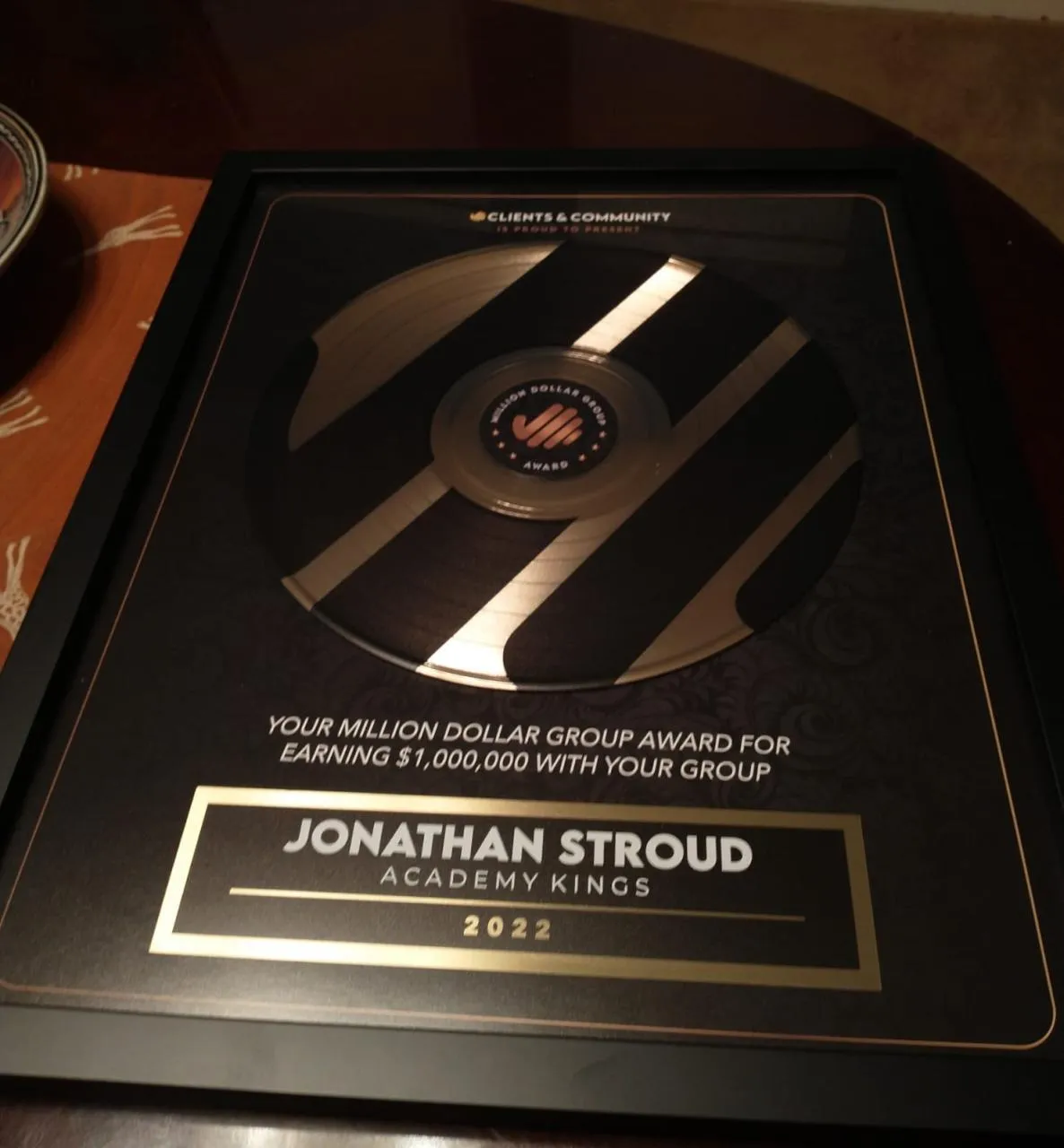
$1,000,000 Award For Group Ads Funnel
Awarded Paid Ads Facebook Group Sales Funnel That Generated Over $1,000,000+ in Sales Awarded by Clients & Community.


PASSIONS
All things Space,
marketing,
sales funnels & paid ads.
Reading & learning
Growth mindset.

3X NASA SOCIAL
Attended Multiple NASA Social to include:
Journey to Mars SLS Engine Test
ORBITAL ATK: ANTARES RETURN TO FLIGHT
NASA's Langley Research Center splashdown test of the Orion Crew Module.

COPYWRITING
After college, was freelancee copywriter with USRA for NASA's SOFIA Telescope.
& had a space blog where interviewed Apollo 15 & STS Astronauts monetized through affiliate marketing & influencer strategies.
Featured ON:






GET TO KNOW JONATHAN BETTER:



Read Jonathan's Latest Blogs Here:

Ford Revolution Space Stake: 5 Growth Lessons for Space
TL;DR: Ford is making a minority investment in Revolution Space, a Boston-based spacecraft company, and will lend its factory, engineering and supply chain know-how to help it build spacecraft at scale. The companies did not share the deal size. Ford's strategy chief summed up the logic: "Ford's strength is building complex products in large volumes, something today's growing satellite market requires." For space companies, the lesson is clear. Big industrial players are now shopping for space partners, and the startups that get picked are the ones that can prove they are ready to scale.
Key takeaways
- Ford Motor Co. said on November 23 it will take a minority stake in Revolution Space and help the company scale spacecraft production, SpaceNews reported.
- The investment runs through Ford's subsidiary Industrial Platform LLC. Financial terms were not disclosed, and closing depends on regulatory approvals and other customary conditions, Quartz reported.
- Ford will bring design, engineering, manufacturing and supply chain support as satellite programs move from hand-built units to repeatable, automated production, Manufacturing Dispatch reported.
- The announcement did not name any spacecraft or set a production timetable, SpaceEnergy noted.
- For space companies, the lessons are about proving you can scale, telling a clear story to strategic investors, borrowing credibility, planning for volume buyers and staying honest about what is still unknown.
What is the Ford and Revolution Space deal?
Here is the news in short. On Monday, November 23, Ford announced that its subsidiary Industrial Platform LLC signed an agreement to make a minority investment in Revolution Space. Revolution Space describes itself as a prime contractor for advanced space systems that use in-space propulsion for precise control and sustained maneuvering. SpaceNews described it as a company expanding from electric propulsion into complete spacecraft.
The key points:
- A minority stake, size not disclosed. Neither company shared the dollar amount or the percentage Ford will own.
- Manufacturing help, not just money. Ford says it will apply its design, engineering, manufacturing and supply chain skills to "industrialize" Revolution Space's next generation of spacecraft.
- A wide target range. The companies say the investment will help Revolution Space operate from very low Earth orbit to geosynchronous altitude, across cislunar space and beyond.
- Not closed yet. The deal still needs regulatory approvals and other customary conditions.
Revolution Space is headquartered in Boston, with key locations in California, Washington, D.C., Albuquerque and Denver. Its board chairman is Daniel S. Goldin, the longest-serving NASA administrator. Goldin said the company looks forward to working with Ford to industrialize its systems "to execute on a wide range of missions across all orbit regimes."
This is also a return of sorts for Ford. According to the announcement, Ford built communications and weather satellites for NASA, the military and NATO from the 1960s into the 1970s, and in 1976 its aerospace division won a contract to build seven communications satellites for Intelsat.
Why does this matter for the space business?
First, it shows where the bottleneck is moving. The companies said satellite programs are shifting from hand-made builds to repeatable, higher-volume, automated production, driven by demand in communications, navigation and Earth observation. Building one great spacecraft is no longer enough. Buyers want to know you can build many, on time.
Second, it brings a new kind of investor into the market. Ford called the move part of a strategy to diversify into businesses with strong growth and return potential that are less cyclical, and where it has a competitive advantage. It also called it a disciplined bet with limited capital. That is how a strategic investor thinks. It wants a fit with what it already does well, not just a big market.
Third, it raises the bar for credibility. A startup backed by a household-name manufacturer can tell buyers a much stronger story about delivery and supply chain risk. Competitors without that kind of partner will need other ways to prove they can scale.
We saw a similar pattern when CesiumAstro raised a large round to grow production, covered in our post on CesiumAstro's Series D.
Who wins and who loses from the Ford deal?
Likely winners
- Revolution Space. It gains a manufacturing partner with decades of volume experience and a well-known name to put in front of buyers.
- Space suppliers that can build at volume. If more satellite makers move toward automated production, parts and subsystem suppliers that can scale with them become more valuable.
- Other space startups seeking strategic partners. The deal is a public example that large industrial companies are open to space bets, which can make those conversations easier.
- Buyers of proliferated constellations. More production capacity can mean more options for programs that need many spacecraft.
Likely losers or under pressure
- Builders that only do hand-made, one-off spacecraft. If buyers start to expect volume, low-rate builders may have to explain why their model still fits.
- Startups with no clear path to scale. Investors and buyers will compare them with competitors that have industrial backing.
- Teams that oversell. The deal has no disclosed size, no named spacecraft and no production timetable. Companies that copy the headline without the substance will lose trust.
What should space entrepreneurs do now?
1. Show proof that you can scale
Ford's pitch is about volume. Your buyers and investors are asking the same question, even if they do not say it out loud. Put your production story on your website and in your deck: how you build, what you can repeat, and what would change if orders grew. Our space marketing guide covers how to turn that into clear positioning.
2. Speak a strategic investor's language
Ford explained its move in terms of fit, growth and less cyclical returns. If you want a corporate partner, frame your company around what the partner gains, not only what you need. Our space startup funding guide walks through how different investor types think.
3. Turn partnerships into credibility, carefully
A known partner is one of the strongest trust signals a young space company can have. When you land one, announce it well and keep repeating it in sales conversations. Our funding and contract announcement playbook shows how to get more mileage from news like this. Stick to what the deal actually says.
4. Build your Dream 100 list beyond the space industry
This deal came from outside the usual space investor circle. Automakers, industrial manufacturers and other non-space companies may be looking for a way in. Add them to your target list. Our post on Dream 100 partnerships for space companies explains how to build and work that list.
5. Be honest about what is still unknown
The best announcements are specific. Ford and Revolution Space shared the logic and the roles, but not the size, the spacecraft or the timeline. When you announce your own news, say what is real today and what comes next. Buyers notice the difference. Our post on space supply chain startup opportunities covers other places where scaling gaps create openings.
A quick checklist for space companies watching this news
- Scale story: Can a buyer see how you would deliver ten or a hundred units, not just one?
- Partner fit: Do you know which large companies would gain the most from working with you?
- Credibility: Are your partnerships and track record easy to find on your website?
- Target list: Does your outreach list include non-space industrial companies?
- Accuracy: Do your announcements stick to facts you can back up?
Frequently asked questions
What did Ford announce with Revolution Space?
On November 23, Ford said its subsidiary Industrial Platform LLC signed an agreement to make a minority investment in Revolution Space. Ford will also apply its design, engineering, manufacturing and supply chain skills to help scale production of Revolution Space's next generation of spacecraft.
How much is Ford investing in Revolution Space?
The companies did not disclose financial terms, including the size of the stake. Ford described it as a disciplined bet with limited capital. The deal still has to meet customary closing conditions, including regulatory approvals.
What does Revolution Space do?
Revolution Space is a Boston-based prime contractor for advanced space systems that use in-space propulsion for precise control and sustained maneuvering. Its chairman is former NASA Administrator Daniel S. Goldin, and it says its systems are aimed at missions from very low Earth orbit to geosynchronous orbit and cislunar space.
Why is Ford investing in space?
Ford said the move is part of a strategy to diversify into businesses with strong growth and return potential that are less cyclical and where it has a competitive advantage. It sees satellite production shifting from hand-made builds to repeatable, higher-volume manufacturing, which fits its strengths.
What does the Ford deal mean for other space startups?
It shows that large industrial companies are open to space partnerships when they see a fit with their own strengths. Startups that can show a clear path to scale, explain what a partner gains and back up their claims will be in the best position to land similar deals.
Want to work through this with other space founders?
Join Space Entrepreneurs, free. Space Entrepreneurs is the free Skool community I host for founders who are starting, marketing and growing space companies. Bring your questions, share what you are working on and learn from people building in the same industry.


Want Better Ads?
Get Your Ads Health Checklist For FREE Today!

